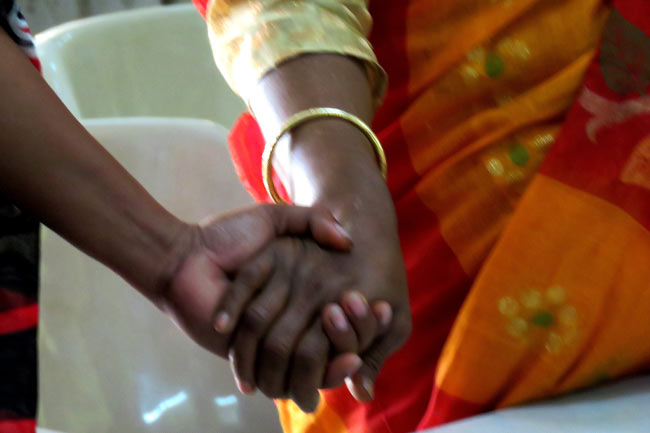
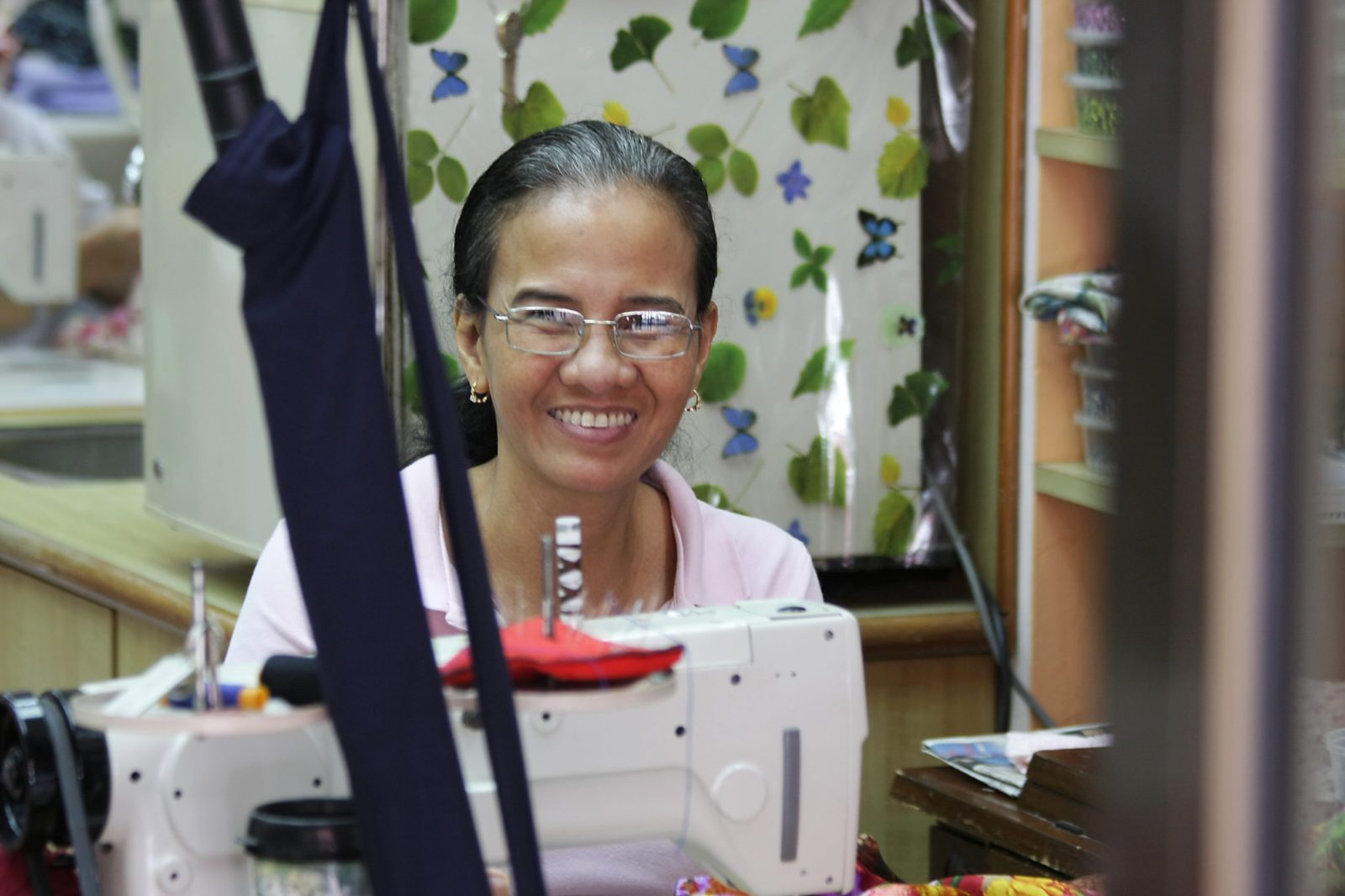
Young volunteers in Myanmar have responded to an appeal by the National Youth Commission, inviting them to become part of helping their country in the face of the current health crisis. The COVID-19 pandemic has brought the nation to rise together in unity to combat the disease, and the Christian youth are doing their bit to support their country.
It echoes the activities of the early Church where Christians were known to care for those suffering from infectious diseases. This same ‘sacrificial care’ is shown by some young people in Myanmar.
Twelve young Christians have come alongside hospital staff in Okklapa, loacted in southern Yangon (also known as ‘Rangoon’), Myanmar’s capital and largest city. Some of them have temporarily left their jobs to be able to volunteer.
The hospital’s management, doctors and church leaders commended them, expressing the hope they “can inspire others to share their time, energy and service for the common good”. Christians form a very small minority in the country, and are often marginalized by the society.
With the help of our local partners, Open Doors has been able to distribute food and other emergency aid to 4,200 families who are affected by COVID-19 and the lock-down measures in Myanmar.
Myanmar has been torn apart by several internal conflicts for decades in what is said to be the world’s longest ongoing civil war. Fighting between ethnic groups and the army erupts regularly in the north-east part of the country, where large pockets of Christians live. In 2017 the mainly Muslim Rohingya people were driven out of Rakhine state in what the International Court of Justice has called “genocide” on the part of Myanmar.
Please Pray
For protection upon the young believers who are investing their lives in serving as volunteers in hospitals and other areas of need.
For a continued spirit of unity and collaboration as the nation of Myanmar fights the ongoing pandemic. May Christians and other minorities not have to face discrimination while receiving aid from the government.
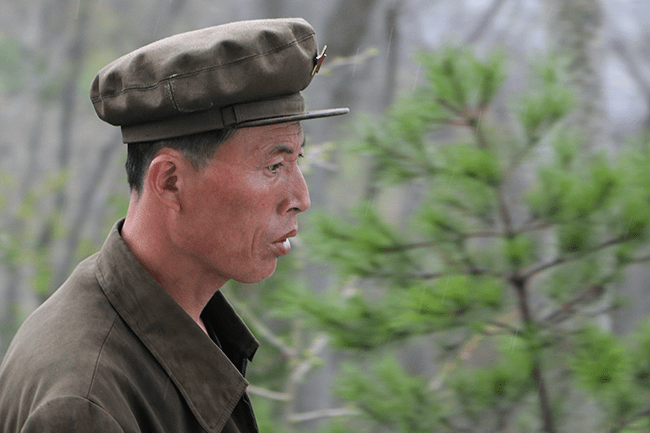
Today, June 25, marks 70 years since the start of the Korean War. During this time, the church in North Korea has not only survived, but grown.
A North Korean soldier, 70 years after the beginning of the Korean War.
Christians in North Korea were already beginning to experience extreme persecution under Kim Il-Sung’s regime when the war began – and the persecution only got worse once the war was over. Despite the oppression they have lived under for over seven decades, the underground church has not only survived since the Korean War, but grown.
When the Korean war began, the Korean peninsula was already split in two, having been divided up at the end of World War II in 1945 – the United States had occupied the South, while the Soviet Union had occupied the North.
Under Kim Il-Sung’s regime, Christians were already facing persecution before the Korean War, as he saw them as a threat to his political power. Christians and churches were openly regulated and oppressed. The believers were forced to register with the Workers’ Party, and those who refused were arrested, banished to remote areas such as Siberia, or killed. Small churches were forced to merge with bigger churches for easier surveillance, and the pastors were ordered to put pictures of Kim Il-Sung in their chapels. Refusal meant arrest, torture, and death. Many fled to South Korea to escape the rising levels of persecution.
The war begins
The Korean War began on June 25th 1950, when the North bombed the South’s camps at the 38th parallel, the line that separated the North and the South. Within three days, Seoul was captured by the North’s army. The troops continued advancing until in September they had taken all the cities in the South but one.
In Pyongyang, a ‘Christian’ rally was held, chaired by Pastor Kang Ryang-uk, Kim Il-Sung’s uncle and right-hand man. At the rally all Christians in the Korean peninsula were told they must give undivided loyalty to the future communist country that would be led by Kim Il-Sung.
The church after the war
If a Christian wanted to live after the war, they were left with three choices: try to flee to the South, hide their faith, or deny their faith. Many leaders and members of North Korean churches decided to go underground. Despite the extreme persecution Christians faced, the believers who survived the Korean War kept the faith alive, and God graciously allowed many of their children to come to faith too.
From war survivor to secret believer to prisoner
Hea Woo is a North Korean former secret believer who now lives in South Korea and travels the world for Open Doors to speak about her birth country and the underground Christians. Her life story is the story of the North Korean Church since the Korean War began.
She was born in the 1940s, and remembers the Korean War breaking out. She says, “Our village was on the border between the North and the South, which meant it was right on the front line. It wasn’t long before North Korean soldiers appeared and told everyone that they had to leave. My mother, sister and I left too. My father had already been called up to serve as a doctor in the army, and we never saw him again. One day, I looked at my mother and I saw that she was wearing a chain with a little cross on it. ‘What’s that, Mummy?’ I asked. She quickly hid her chain. ‘Sssh,’ she said. ‘You mustn’t tell anyone about this.’ I never said anything to anyone about it, but I always remembered it. And only many years later did I realize that my mother had been a Christian.”
Finally, Hea Woo came to faith herself when she – like so many North Koreans – made her own escape to China, and met Christians there who shared the gospel with her. She says, “There is only one explanation as to why I accepted this ‘incredible’ tale as the truth: my mother and my husband had prayed for me. I’m convinced of this.”
Her new faith didn’t make her life easy; she was eventually also captured and sent back to North Korea, enduring years in a terrible labour camp. “Every day was torture,” she says. But she knew God hadn’t abandoned her; she heard His audible voice, experienced His healing, and was even able to lead five other prisoners to faith in Jesus.
Hea Woo says, “I remained faithful and God helped me to survive.” Open Doors has heard many similar testimonies. Not only of Christians who have escaped the country, but also of those who returned to North Korea or never left in the first place. Brother Simon, Open Doors’ coordinator for North Korea, says, “Thanks to our Almighty God, the North Korean Church is still very strong. Through His provision we are able to help the Christians via our safehouses and networks in China, close to the border.”
The church grows with your support
The church in North Korea has not only survived under persecution since the Korean War, but grown. It’s difficult to get exact figures from this secretive nation, but Open Doors estimates that there are between 200,000 and 400,000 Christians in North Korea today – the actual number could be even higher.
Your prayers and support have helped to make some of this growth possible. Open Doors runs safe houses in China for North Koreans who have made the illegal journey over the border in search of food and work. Many North Koreans have encountered the gospel for the first time in these safe houses, and then taken the good news back to their families in North Korea, along with food, medicines and Christian materials, provided with your support. Open Doors also broadcasts Christian radio programs into North Korea, helping to build the faith of secret believers, and bring the gospel to those who may never have heard it before.
Please Pray
As we remember the start of the Korean War, and what that meant for the church in North Korea, please continue to stand with our persecuted church family there in prayer and action. Your support not only enables North Korean believers to survive the harsh realities of life in North Korea and stay strong in their faith, but helps to remind them that they are not alone or forgotten.
One believer sent us a message saying, “As the light of the sun shines through the cracks and adds warmth, in the same way we are touched by your love and warmth that flows through our hearts. Our hearts are overwhelmed and we cannot stop our tears from flowing. We thank you for your sacrifice, warmth and consideration to take care of us. We feel your warm heart and mind every minute and second. We do our best to serve our Lord and live a faithful life.”
Learn More
To learn more about our persecuted family in North Korea, you can listen to this episode of the World Watch Weekly Podcast.
Magid walks towards us with a big smile when we meet him near his house. “Follow me,” he says, gesturing towards the stairway of his apartment building. It’s seven flights up, but the climb is rewarded with the bright eyes of his daughter Maryam (9) who greets us with a shy ‘hello’. It is so good to see that Magid looks better than the last time we visited him three years ago.
Magid holds a photo of his wife, killed in a bombing three years ao.
Magid is a single father of two children. In 2017, Egypt was rocked by tragic Easter bombings. An Islamic fundamentalist suicide bomber detonated a bomb near the gate of St. Mark’s church in Alexandria, a town of significant Christian population. Magid lost his beloved wife of ten years and mother to their two children in the attack.
“The grief never goes away. During the past three years, the feeling of loss has remained.” Magid shares his life journey as we sit down and ask how he and the family are doing.
The picture of Magid’s deceased wife, Hannan fills a big part of the living room wall. On the other side there’s a picture of Magid’s nephew. Magid and his extended family had been selling Easter palm branches in front of the church gate when a suicide terrorist blew himself up. His wife, as well as his brother, his nephew and several other relatives were killed in the blast.
Looking fondly at his daughter, Magid tells us that He became much closer to his children over the last three years: “I try to be like a friend to my children and a mother and father in one. I play with them and we pray together. I try to give them as much love as possible. They should always feel loved.”
Her father is doing a good job, says Maryam. “He works, but he is also around a lot for us. He is very kind, forgiving and peaceful. He has a lot of love inside, and he teaches me how to love others too. I want to be like him when I grow up.” She says excitedly.
Magid smiles hearing his daughter speak. “It’s not easy to take care of two children on my own, but God gives me peace,” he says. “I struggle most when I see how much the children miss their mother, miss her tenderness. Then it helps to visit the monastery where she is buried. We go there twice a month. Being there helps us to feel peaceful, close to God.”
Maryam nods. “I miss my mother a lot,” she says, “but I know she is with Jesus.” She stretches out her arms: “My love for God is so big, bigger than the whole world.”
Life continues
Magid takes us outside.Not long after the last time we visited Magid, he opened a little supermarket just down the road. To be able to take care of his children, he had to quit his job as a barista, as it included a lot of late-night shifts. The business is only a few steps away from their house. He is very proud of his son, Youssef, who is 14 now. We find him managing the cash desk in his father’s absence. Magid shows us some of the products in the aisles, “Look, I labelled all the goods with prices, so that the customers don’t argue about the price with him.”
Seeing Magid interact with his two children, it’s obvious he loves them to bits. The pain of the loss of the wife and mother of this family won’t go away, but they have got back on their feet, and live in the peace-giving presence of the Lord. They are not afraid. Not even to sell Easter palm branches at the church again. “Even if a terrorist targets the church again,” says Magid, “it would be an honour to die for Jesus.”
Please Pray
Magid requests prayers for his two children, Youssef and Maryam, that they will remember their mother’s faith. She was always reading the Bible with them and taught them how to pray. May they grow strong in the knowledge of God’s word.
He seeks prayers that he will be able to raise his children with God’s help. He is thankful and says they don’t feel alone anymore. “God sends His people to help us and to pray for us. That is comforting to me.”
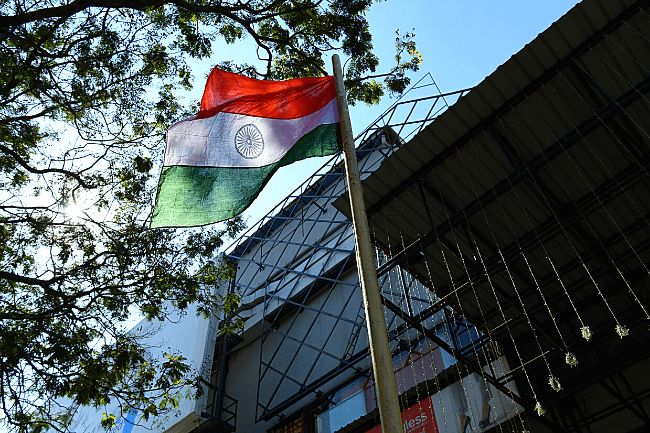
Problems for people in India are piling up: While still battling the COVID-19 virus, the country’s east has been hit by the worst cyclone in a decade, the northern states are suffering under a heatwave and the west and central parts are fighting an invasion of locusts. For Christians, the situation is worse because they often are ignored when aid is distributed.
While the government and non-governmental organizations are trying to help people by distributing food aid, Christians often are bypassed, a local partner has told us.
“Aid is being distributed to the local shop or the local village committee and they won’t give Christians the food, not even when they have a food ration card,” said the local partner, whose real name is being withheld for security reasons.
India ranks among the top 10 of the Open Doors World Watch List of countries where it is most difficult to live as a Christian. If living in a village outside major cities, the challenges can involve forms of social boycotting. One example: Christians are forbidden to buy food or draw water from the local well, forcing them to find food and water elsewhere. Covid-19 restrictions on movement, however, have made that impossible and, as a by-product, also jeopardize employment and income.
The OD partner said a Christian family was denied help from the local village committee because the Hindu villagers said the family already had received help from foreigners. “The reality was that they were laborers who had lost their income and now nobody gave them any supplies to survive,” she said.
A disabled Christian man and his family in another village also were ignored when food aid arrived. “They have been opposed by the village since they came to faith and the local people aren’t willing to give him and his family any food,” the OD partner said.
We work in partnership with local church partners to help persecuted Christians in India with urgent aid and relief, persecution preparedness training, and local advocacy. During the isolation period to deter the virus from spreading, rapid relief of emergency aid has been provided to persecuted Christians who need support. So far, some 1,000 families have received vital food and other supplies to last for at least one month, and preparations are underway to help another 7,000 families.
‘Bigger disaster’
As of June 11, India is among the top 4 countries worst-hit by COVID-19 with almost 7,000 new infections registered in one day, leading to close to 300,000 confirmed cases (NDTV).
One of the provinces with the highest number of infections, West Bengal in northeast India, was hit last week by Amphan, the biggest cyclone in 10 years. In the capital Kolkata, or Calcutta, it destroyed homes, flooded roads, and cut electricity to 14 million people. The province’s chief minister told India’s press agency the destruction caused by the cyclone was “a bigger disaster than COVID-19” as reported on the BBC.
Please pray for those impacted by the pandemic in India to find relief, and that our brothers and sisters would not be overlooked by the government and other relief agencies.
Algeria is now on the US government’s persecution radar
When the U.S. Commission on International Religious Freedom released its 2020 annual report in April, India was the main attraction. But it shouldn’t pass unnoticed that, for the first time, the northern-Africa nation of Algeria now is officially on the USCIRF radar.
The commission put Algeria on its “Special Watch List.” The 15 countries on this list, in the commission’s judgment, “engaged in or tolerated severe violations” of the right to religion or belief in 2019. Conditions in these countries don’t quite match the “systematic, ongoing, egregious violations of religious freedom” that characterize the 14 “Countries of Particular Concern,” which the commission regards as the worst of the worst — the group India re-joined this year after a 16-year absence.
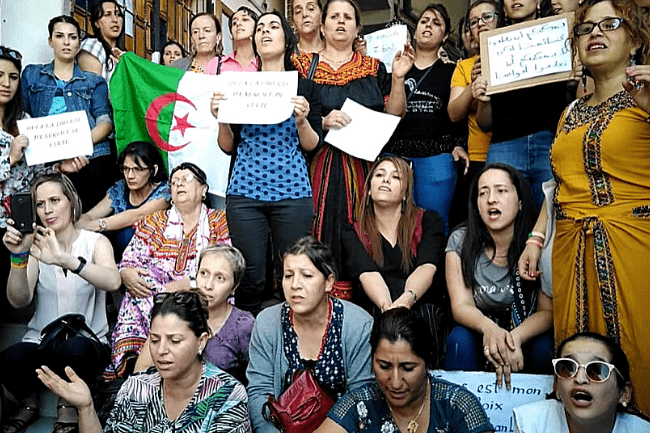
Still, Algeria’s new enrollment on the Special Watch List puts it alongside Afghanistan, Cuba, Kazakhstan, and other countries where Christians experience severe pressure because of their faith. The government of Algeria, whose 43 million people are 98 percent Sunni Muslim, ramped up pressure on religious minorities in 2019, the US commission said in its report: “The government systematically cracked down on the Evangelical Protestant community in particular through a string of church closures and raids.” The country ranks No. 17 on the 2020 Open Doors World Watch List. That’s up 5 ranks from the previous year’s list; the rise is reflective of the generally deteriorating conditions for Christians across western Africa.
Algeria’s debut on the Special Watch List means that the commission, which is an advisory body to the president, wants the US State Department to begin directly questioning Algeria’s government about its rules for registering minority religious communities, and to start conditioning cultural exchanges on religious-freedom improvements. The state department each December issues its own Special Watch List and list of Countries of Particular Concern, using the commission’s report as a recommendation. Should the state department ever designate Algeria as a Country of Particular Concern, Washington would be obligated by US law to impose economic sanctions if diplomatic efforts to improve conditions fail.
Such wheels turn slowly, but not without effect. India spent 10 years on the commission’s Special Watch List until it was finally elevated – or, perhaps, demoted — to the Countries of Particular Concern this year.
Please pray for Christians in Algeria to be able to have access to the fundamental human right to freedom of religion or belief.
Pray for the churches that have been closed by the authorities, that the government may allow these to open once again.
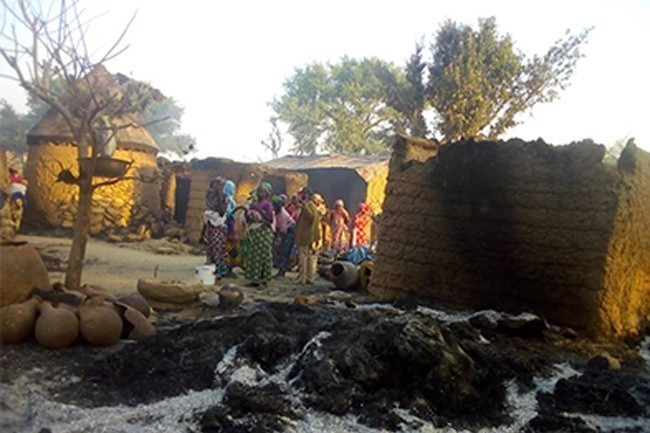
A string of violent incidents in the western African Sahel in recent weeks has provided the kind of evidence that has pushed countries in that region up the World Watch List for 2020. Churches and Christians are increasingly being targeted by Islamic militants. In February the U.N. had reported that “unprecedented levels of armed violence” in the border regions of Burkina Faso, Mali and Niger already had driven more than 1.1 million people out of their homes into displacement camps.
A manager for Catholic Relief Services said that because of the deteriorating situation in the Sahel, “It is becoming increasingly challenging to reach vulnerable populations. If the violence continues unabated, the numbers of displaced can be expected to rise dramatically”.
The Sahel is a transitional zone spanning the continent between the southern edge of the Sahara Desert and Africa’s southern interior. Militant Islamist groups, some of them driven out of the Middle East and elsewhere, have found a foothold in the regions borderlands, which are beyond the control of the weak national governments of Western Africa.
In Mali, a military base was attacked, killing at least 25 soldiers of the Malian army. The attack on the Malian army based harmed no civilians, and not all of the violence across the region specifically targets Christians. But Christians and their churches are increasingly targeted, the Open Doors World Watch Research unit mentioned.
Despite some French military success at suppressing insurgents since 2012, “radical Islamic groups have now regrouped, fueling ethnic rivalries in central Mali and elsewhere to boost recruitment and destabilize the region” World Watch Research persecution analyst Yonas Dembele said. “Christians are being indiscriminately targeted, with the Muslim population mostly being spared.”
In Niger, some Muslim groups, who have been encouraged by firebrand imams angered by government orders to halt worship services in mosques and churches to slow the spread of the Covid-19 virus, took to the streets, setting fire to government buildings in one city, and provoking police volleys of tear gas in another. The population of Niger is 96% Muslim, and the small Christian community is deeply worried at growing Islamic extremism.
Incidents like these create a climate of fear and Christians still remember a few years ago when more than 45 Christian churches were attacked and burned.
A year ago, neither Niger nor Burkina Faso were included in the Open Doors World Watch List. This year, they are ranked 50th and 28th, respectively. Mali remains in the middle of the rankings, at No. 29.
Iranian authorities summoned four Christians on May 28th to begin serving their five-year sentence.
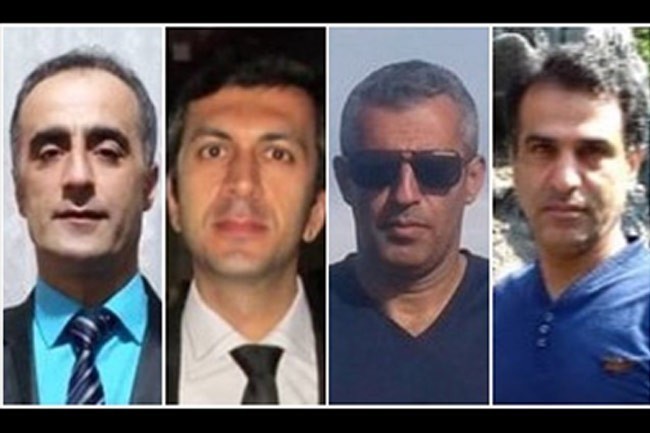
Hossein Kadivar, Khalil Dehghanpour, Kamal Naamanian and Mohammed Vafadar obeyed the summons and are now placed in the notorious Evin prison.
They were among nine Christian converts who were arrested over a four-week period at the beginning of 2019, accused of endangering state security. Following a disagreement with the judge over the choice of a defence lawyer, the other five men were immediately transferred to Evin prison, as they were unable to meet exorbitant bail demands of about $130,000 each.
In October 2019 all nine were convicted of “acting against national security” and each sentenced to five years’ imprisonment. The sentences were upheld on appeal in February 2020.
Of the four men who presented themselves at Evin Prison earlier this week, three are married with families, while Mohammad is single.
Iran is at the number 9 position on the World Watch List. Believers in Iran suffer extreme suppression, but despite the risks, Iran has one of the fastest growing underground churches in the world.
Please pray
Left to Right: Khalil Dehghanpour, Mohammed Vafadar, Kamal Naamanian, Hossein Kadivar.
• God will comfort the families of all Christians in prison, providing for their needs and caring for the children in particular
• God will grant his peace to those who recently started serving their prison sentences and encourage them greatly
• Iran will respect the freedom of its citizens to follow the faith of their own choosing and stop criminalizing the activities of Christian converts as though they are acting against national security
Aman* came to know Jesus when he was 23. It was at the time of turmoil in his home region. The government efforts to uplift rebels from the area made life dangerous, and Aman decided to flee and remain in hiding.
It was during this time that he met Christians who ran a ministry in his region. They told him that Jesus was our only Savior. “I couldn’t stop thinking about what I had heard,” he explains. “I could not sleep for three days.”
From then on, Aman devoted his time to studying the Bible. “I learnt that Jesus is the only way to Heaven. I did not think too much about Islam anymore…I committed my whole life to Him.”
Persecution followed shortly after his decision to follow Christ. “I was about to get married to a Muslim lady – a distant relative. When her father and my mother learned that I had become a Christian, they called the whole thing off.”
Not only that, but his life was in real danger as his family tried to force him back to Islam or make him face the consequences. Eventually it was not possible for him to return home anymore.
Aman found himself on the run once more. This time he found safety with Christians where he could undergo discipleship.
Supported by Open Doors, his new home offered him an opportunity to study the Bible, spend time in prayer fellowship with others, undergo discipleship and receive timely encouragement. “Every time you visited, we knew people were praying for us and were so grateful for your concern!”
Open Doors was also able to support Aman in the establishment of a small business. He rented a small store and started a stationary business with a friend. The business was doing well, and he felt after all the disruption caused by his conversion, life was on track again. “I felt so blessed and thankful for the way you supported me in different ways. I really thank everyone for the practical love you have shown to me.”
But at some point, police found out about the ministry to Aman and other Muslim background believers (MBBs). Police ransacked their home and locked up Aman and some of the other MBBs.
“I was in prison for 17 days because I had become a Christian. It was difficult, but while I was there, I learnt to be patient. I also prayed a lot for others who were in similar circumstances. I spent all my time in prayer for them. Although it was very hard in prison, I felt that I was part of making history in Sudan. I felt that I was part of the team bringing change through prayer.”
Upon his release, Aman learned that he had once more lost everything. He needed to start from scratch again. But he is not alone. Open Doors, through the local church, continues to offer life-saving support in the form of a roof over his head and continued discipleship. Thanks to the investment, his faith remains unshaken and he continues to share the hope of Christ with others around him.
Open Doors is committed to continue support to this small but courageous community of believers. “We thank all the supporters. We are very, very happy. God bless everyone who is supporting us. We feel we are part of you. We are also praying for you to continue working with us. We are blessed through you,” Aman concluded.
To find out more about Sudan and how you can pray for our brothers and sisters there, check out our podcast:
An appeal hearing to review the cases of Pastor Victor Bet Tamraz, his wife Shamiram Issavi Khabizeh, and three other Christian converts was cancelled yesterday (June 1).
Pastor Victor and Shamiram went to Branch 36 of the Islamic Revolutionary Court in Tehran along with their lawyers and legal representatives for the Christian converts. After a long wait, they were informed that the hearing was cancelled. No reason was given, and the lawyers were not allowed to approach the judge.
This was to be a combined appeal hearing for three long-standing cases. In February 2019, the presiding judge had announced June 1st as the next hearing date.
The first case involves Pastor Victor of the Assyrian Assemblies of God, and two Persian Christian converts, Amin Nader Afshari and Kavian Fallah Mohammadi, who were all arrested at a December 2014 Christmas celebration.
The second case to be a part of this combined ruling also involves Amin Nader Afshari, re-arrested in August 2016 along with another convert, Hadi Asgari.
The third involves Shamiram, Pastor Victor’s wife, summoned by authorities in June 2017. Between them, they are facing a total of 55 years in prison on national security charges.
In this time of the COVID-19 pandemic, the delays and postponements are adding stress for the defendants and their families.
Iran has seen a record number of COVID-19 cases, and the government has pardoned and set free many prisoners. May these believers also find favour with the authorities, and their cases dismissed without much waiting.
Thank you for supporting Pastor Victor, his wife Shamiram, and others in prayer and for sending them letters and notes of encouragement. Please do continue to intercede for them.
Iranian Christians request prayer:
• For these cases to be reviewed correctly, and that the heavy and unjust prison sentences will be overturned
• The lawyers representing the defendants will have the wisdom to present their case well
• The Lord will encourage Pastor Victor, Shamiram, Amin, Kavian and Hadi through the continuing injustice
Our partners in India shared with us this cry of help from a believer. A few weeks ago, this widow reached out to her pastor for help as she was looking for support. Usha* was desperate to feed her children and as no one had delivered aid to her village.
The lockdown situation in India has brought the country to a standstill, with Christians who are day labourers or under the poverty line finding it difficult to provide for their families. They are either unable to reach the venues where government rations are available, or they are left out of the government endorsed relief efforts due to their faith in Jesus.
After receiving this call, our partners in the field reached out to Usha with an emergency food pack that has helped her and her family for the past several weeks. Usha was very grateful, as in her desperation, she still wanted to be able to maintain her dignity. Her faithfulness to God was evident. She expressed thanks unto the Lord for providing for the needs of her family.
In total, we’ve been able to deliver more than 20,000 emergency food packs to Christians like Usha in Asia alone.
The need to rush emergency food packs is even greater—some families have been waiting on relief for days or weeks, and their supplies are running low. Our teams in the field let us know that we need to serve at least another 50,000 Christians with food survival kits.
What’s in a food kit? Critical staples like flour, rice, tea, cooking oil, salt, potatoes, soap, masks and sanitizer.
Right now, we’re walking alongside Usha and her family to help them survive. One of our partners recently took this short video during his last visit to her village.
We give thanks unto the Lord for providing so faithfully for these believers. Thank you for being the hands and feet of Jesus at a crucial time like this.
Please continue to pray for Usha and millions of other persecuted Christians in India, who are often neglected in the aid distribution. And please, send an emergency food kit today—and let them know they are not alone.
What could be worse than COVID-19? A super cyclone during COVID-19.
The Super Cyclone ‘Amphan’, which some are calling a monster cyclone, hit coastal areas in Bangladesh and the adjoining East coast of India on Wednesday night. Rain and winds blew in from the Bay of Bengal since the afternoon of May 19th and kept moving inwards at around a 150 kph wind speed, causing heavy rains.
Over 2.4 million people were moved to safety shelters within one day. Communities who live in coastal areas were the first to experience the wrath of the cyclone, followed by adjacent districts.
The cyclone caused massive tidal waves, which destroyed embankments, causing hundreds of villages and towns in districts such as, Bhola, Patuakhali, Khulna, Barguna, Barishal, Laxmipur to be completely submerged under water. The states of West Bengal and Orissa in India were also hit with significant devastation.
In Bangladesh, we were able to contact a few of our partners. One said, “Many houses are damaged, some houses are submerged under water, fisheries are submerged too, crops in the lower land submerged, roads damaged, and no electricity.”
More than 10 million people are left without electricity, especially in the southwestern part of Bangladesh. There is a loss of cellphone and internet connection. Those living there are completely detached from the rest of the country.
There are many believers living in these affected areas, and we are trying to reach them despite the breakdown of internet and telecommunication. Please pray for God’s special hand of protection and provision for them. There is a greater chance of COVID-19 spreading in the cycloneevacuationcentres and as relief work begins in hard hit areas.
Please Pray
– For a quick recovery in the wake of Cyclone Amphan’s devastating impact and COVID-19. Pray for the victims, especially our brothers and sisters to find hope, salvation and comfort in God.
– For God to use His Church to extend love and help toward those affected. Pray that He will open new ways for us as a ministry and other relief organizations to meet the needs of the people.
– For families that have been most affected, especially the vulnerable – the children, elderly, the sick. Pray for the people to be able to return to normal life again.
– For the government to step up measures to try and stop the spread of the virus, especially among the people who were taken to the cyclone centres.
Naomi* is a Christian from a Muslim background in Indonesia, where converting from Islam often means believers are ostracized by their communities and families. Naomi and her husband lead a church, and get money from the congregation’s offerings – but the current crisis makes it difficult for most church members to feed themselves, let alone give offerings.
Naomi attended the Open Doors’ Women Training Centre to learn tailoring, knitting and making women’s accessories in 2018, and later she was provided with sewing machines for her own business and to teach others. But her income is not so good these days. “I have sewn clothes, made earrings, bags and other women’s accessories to sell, but people no longer buy them as they have to cut budget on such things. We can’t count on it anymore,” says Naomi.
After the coronavirus outbreak, Naomi realized she could use her skills to produce homemade masks. “I originally made the masks for my family, but also neighbours and church members, free of charge.” But one day, a shop owner requested her to produce it in large quantities. She now supplies them to the shop regularly.
“The income from the masks selling helps us a lot. The current economic situation makes things every difficult. I am very grateful that I had the opportunity to learn the skills in Women Training Centre because it became a blessing to our community now. Thank you, Open Doors!”
Naomi has a message of hope to share with all of us: “Please don’t lose hope despite the current situation. Although you must stay at home, when you are given a talent and skill, do make something out of it to be a blessing to your surroundings. This mask is my contribution to my family and community.”
Please pray
Pray for believers in Indonesia who are coping with the drastic effects of COVID-19. May they continue to be a source of hope to their community despite the difficulties they face.
Pray for the Open Doors partners who work hard to bring aid to those who are in need the most. Pray for protection for them from the virus as well as from Islamic extremists who oppose them.
This Giving Tuesday, you can support struggling christians in NIgeria
Ongoing attacks have left hundreds dead and thousands displaced—many of them followers of Jesus.
Open Doors partners are working with local believers to help. Your gift today can help provide urgent aid to families who have lost everything in the attacks
A Giving Tuesday gift of $80 can provide vital emergency relief for a Christian family in Nigeria.
An emergency relief pack includes food, medicine, and clothes.
This Giving Tuesday, support struggling Christians in Nigeria
Ongoing attacks have left hundreds dead and thousands displaced—many of them followers of Jesus.
Open Doors partners are working with local believers to help. Your gift today can help provide urgent aid to families who have lost everything in the attacks
A Giving Tuesday gift of $80 can provide vital emergency relief for a Christian family in Nigeria.
An emergency relief pack includes food, medicine, and clothes.
Persecution is growing, and so are the needs of persecuted believers. More Christians need Bibles, discipleship, trauma counselling, and relief aid as they face violence, displacement, and loss.
Your support will empower persecuted believers through Bibles, training, relief aid, trauma counselling, and more.
And thanks to a generous donor, your gift will be matched up to $120,000 so that every dollar has double the impact!
Persecution is growing, and so are the needs of persecuted believers. More Christians need Bibles, discipleship, trauma counselling, and relief aid as they face violence, displacement, and loss.
Your support will empower persecuted believers through Bibles, training, relief aid, trauma counselling, and more.
And thanks to a generous donor, your gift will be matched up to $120,000 so that every dollar has double the impact!

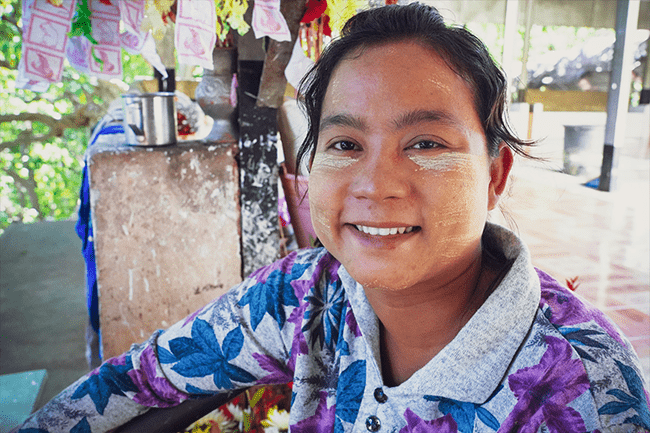






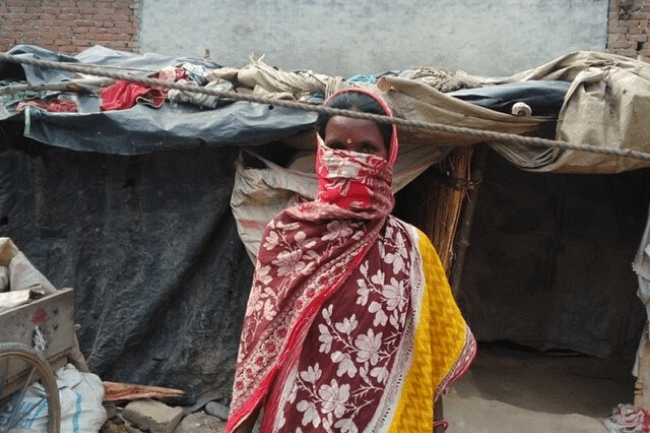
 Our partners in India shared with us this cry of help from a believer. A few weeks ago, this widow reached out to her pastor for help as she was looking for support. Usha* was desperate to feed her children and as no one had delivered aid to her village.